Saturday, May 2, 2026
Home Blog Page 12

Types of Switching Techniques In Networking

Switching Techniques Types In Networking:

A switch is hardware are software equipment that is used to provide the connection between two or more than two devices. And a switched network is made of many interlinked nodes.
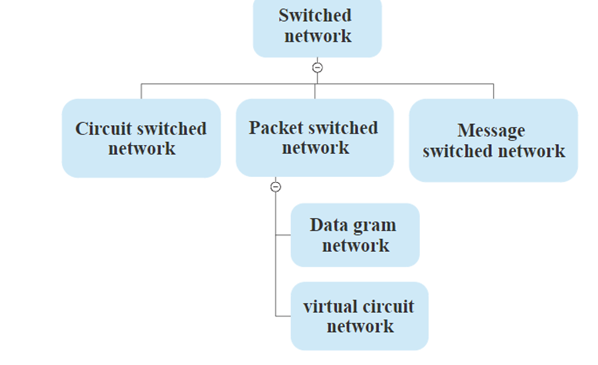
                    Fig: Types of the switched network 

Circuit Switching:

Circuit switching similarly looks like a telephone call, in which it establishes a dedicated physical path between sender and receiver in order to transmit information, this path is continued until total data is sent to the receiver. This path is not shared with others until the sender and receiver stop communication.
Let us consider an example of circuit switching when you set up a call with someone over the phone, a dedicated path is established between your phone and another person’s phone through a switch this path will continue until the call ends.
It mainly used for telephone communication, and computer to computer communication in circuit switching is not so much efficient.

Advantages:
Circuit switching is very simple.
Delay at every node is negligible.
Disadvantages:
Circuit switching is less flexible.
In this channel, capacity is not properly utilized.
It is used for voice communication and does not use for data communication.


Packet switching:

While considering the disadvantages of circuit switching, packet switching is developed. In which switching technology to provide communication between two computers.When compared with circuit switching packet switching as no dedicated path for data transmission between sender and receiver. In this, all the packets that belong to the same message do not need to go in the same route to reach the destination. Packets go through a different route to reach the destination.
In this packet switching type, the data is transmitted in the form of small discrete blocks called packets. Once the best path is selected between source and destination then the sender will send to data, it converts them into packets and routes them to destination.
The packet routing is decided by network-layer protocols. Further packet switching can be classified into two types.
Datagram Approach:
In this datagram packet switching type, each packet is sent from the source to the destination through different routes.
Virtual Approach:
In this virtual circuit, all packets belonging to the same message are sent the same route from source to destination.
Message switching:
Message switching is best known as the store and forward approach for an entire message. In this method a computer receives a message, stores it until the appropriate route is free then sends it along that route.
Goal of decomposable production system


The main goal of Decomposable Production System is to replace a problem goal by set of sub goals .If the sub goals are solved then the main goal is also solved

Explaining problems in terms of decomposable production system allows us to be indefinite about whether we are decomposing problem goals or problem states.


Knowledge of the problem domain:


For efficient working of AI systems, good problem knowledge is required. This knowledge can be subdivided into three categories.

  1. Declarative Knowledge
  2. Procedural Knowledge
  3. Control Knowledge
    Declarative Knowledge
    Declarative knowledge is knowledge about a problem that is represented in the global database. Declarative knowledge includes specific facts.
    Procedural Knowledge
    Procedural Knowledge is Knowledge about a problem that is represented in rules; general information that allows us to manipulate the declarative knowledge.
    Control Knowledge
    Control knowledge is the knowledge about different processes, structures and Strategies used for coordinating the entire problem solving process.

AND-OR Graph

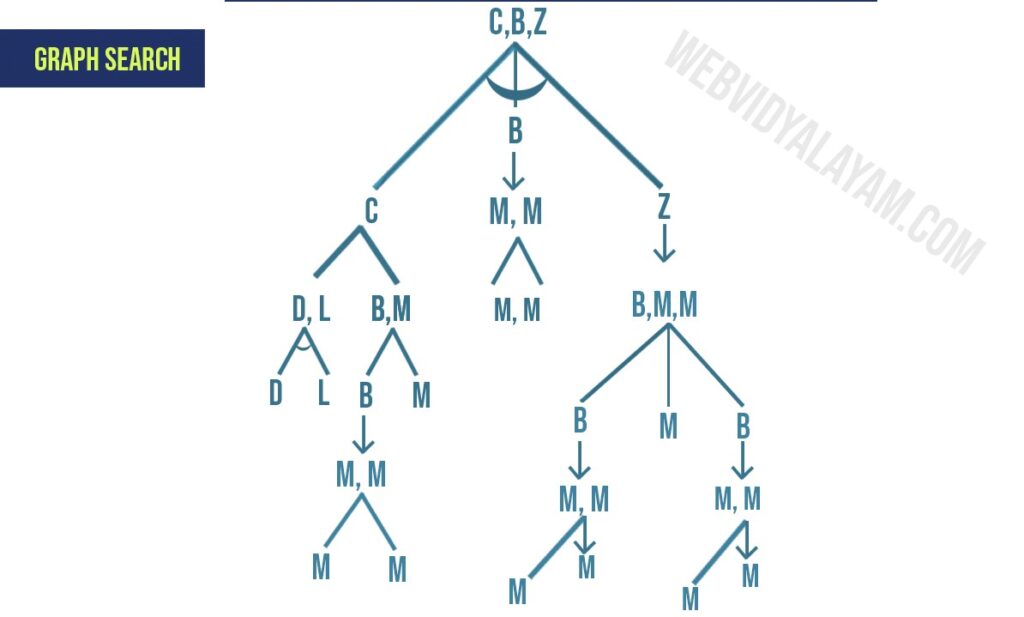
Nodes labeled by component databases have sets of successor nodes each labeled by one of the components. These nodes are called AND nodes because in order to process the compound database to termination all of the component database must be processed to termination.  In the above figure 2,  this node here in order to process C B Z to termination, C,B and Z needs to be processed to termination. In order  to process BM to termination both B and M needs to be processed to termination; so  on and so forth. This type of termination which requires all the successors of single label to terminate for processing that single label is known as AND node.  Another important thing that one needs to realize is that the successor nodes are labeled by the result of rule application.

  Here in the next step in order to process C, we have either of two ways that is we can terminate C by terminating DL or we can terminate with  BM.  Here we can follow any of the successor not both. They are referred to as the ‘OR’ nodes. Because , in order to process a component database to termination , the database resulting from only either DL or BM must be processed to termination. These are referred to as ‘or’ nodes.

 The structure called AND-OR graphs  are useful for depicting the activity of production systems. So the decomposable production system if you see above has these nodes that is  AND  and OR are important because if a component database is AND  then all of the component databases need to be moved to termination. So, that is the AND node here …examples  of AND nodes in the above figure are

  1. C B Z : C, B ,Z  (To process C B Z  all the three successors C,B,Z needs to be terminated)
  2. Z: B,M,B (To process Z all the three successors B, M, B needs to be terminated)

 The above are the AND nodes, here all of them needs to be moved to the termination.

On the other hand , we also have  OR nodes  in the above figure .For example, In order to process the C we can terminate any of the successors (i.e., D,L or B,M).

So, finally we can say that the notion of decomposable production system encompass a technique often called problem Reduction in AI. We have reduced the problem of taking C B Z to termination. To the problem of taking C, B and Z individually to termination.

correlation between two signals and sequences

0

CORRELATION:

The concept correlation can be defined as similarities of two waveforms. It may determine if signal x1(t) waveform contain an amount c2x2(t) of that particular waveform x2(t) in the interval of (t1, t2). It is a measure of the degree to which two sequences are similar.Correlation is of two types cross correlation and autocorrelation.

Cross correlation:

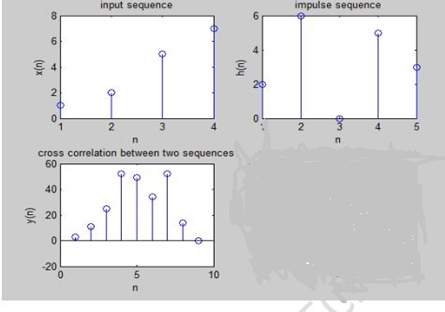
Cross-correlation between two signals indicates what proportion one signal is said to the time-delayed version of another signal.

clc;

close all;

clear all;

% two input sequences

x=input(‘enter input sequence’);

h=input(‘enter the impulse sequence’);

subplot(2,2,1);

stem(x);

xlabel(‘n’);

ylabel(‘x(n)’);

title(‘input sequence’);

subplot(2,2,2);

stem(h);

xlabel(‘n’);

ylabel(‘h(n)’);

title(‘impulse sequence’);

% cross correlation between two sequences

y=xcorr(x,h);

subplot(2,2,3);

stem(y);

xlabel(‘n’);

ylabel(‘y(n)’);

title(‘ cross correlation between two sequences ‘);

Autocorrelation:

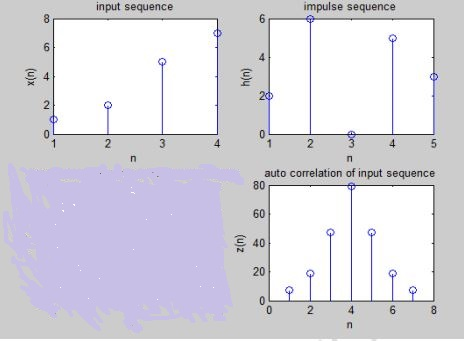
The auto correlation function is a special form of cross correlation function.

clc;

close all;

clear all;

% two input sequences

x=input(‘enter input sequence’);

h=input(‘enter the impulse sequence’);

subplot(2,2,1);

stem(x);

xlabel(‘n’);

ylabel(‘x(n)’);

title(‘input sequence’);

subplot(2,2,2);

stem(h);

xlabel(‘n’);

ylabel(‘h(n)’);

title(‘impulse sequence’);

% auto correlation of input sequence

z=xcorr(x,x);

subplot(2,2,4);

stem(z);

xlabel(‘n’);

ylabel(‘z(n)’);

title(‘auto correlation of input sequence’);

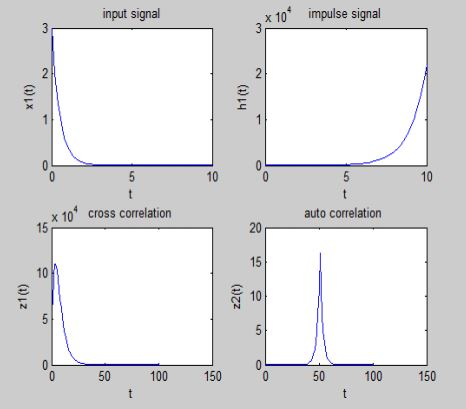
crosscorrelation between two signals

clc;

close all;

clear all;

% cross correlation between two signals

% generating two input signals

t=0:0.2:10;

x1=3*exp(-2*t);

h1=exp(t);

figure;

subplot(2,2,1);

plot(t,x1);

xlabel(‘t’);

ylabel(‘x1(t)’);

title(‘input signal’);

subplot(2,2,2);

plot(t,h1);

xlabel(‘t’);

ylabel(‘h1(t)’);

title(‘impulse signal’);

% cross correlation

subplot(2,2,3);

z1=xcorr(x1,h1);

plot(z1);

xlabel(‘t’);

ylabel(‘z1(t)’);

title(‘cross correlation ‘);

% auto correlation

subplot(2,2,4);

z2=xcorr(x1,x1);

plot(z2);

xlabel(‘t’);

ylabel(‘z2(t)’);

title(‘auto correlation ‘);

Transmission Media Types

Types Of Transmission Media:

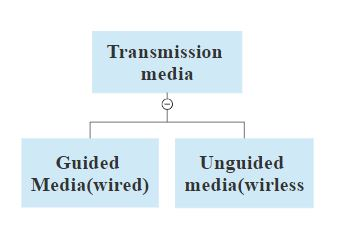
Transmission media is physical path which carry information from one device to another device.some of the examples of transmission media are Guided and Unguided media, transmission will always not in physical form but also it may invisible form. Transmission is categorised as follows:

Fig: Types Of Transmission Media

Guided media:

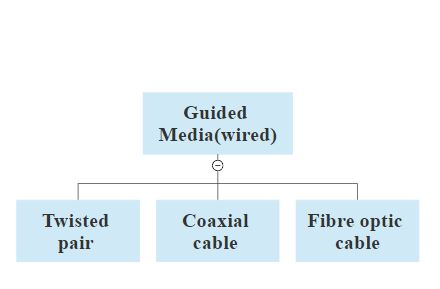
Guided means there will be a physical connection between transmitter and receiver.some examples of guided media are twisted pair, coaxial-cable and fibre optics.

Fig : Guided media types

Twisted pair:

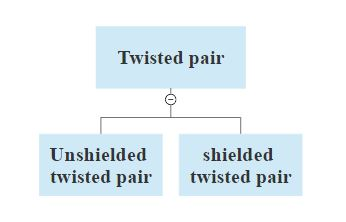
Twisted pair cables are mostly used for transmission of both voice and data signals, twisted pair wire are mainly categorised into two types. Shielded and unshielded twisted pair.

Fig : Twisted pair types

Unshielded twisted pair: (UTP)

UTP wires are mainly used in telephone systems which will carry both the voice and data signals.Unshielded twisted pair cable consist of two copper conductors, the wires will be kept parallel with this it will reduce noise. Noise will reduced  due to twist in the wire. The copper conductor is covered with insulators.some advantages of UTP are it is cheap,easy to install,flexible to use.

Shielded twisted pair: (STP)

The crosstalk which presented in UTP is eliminated in STP because STP wire has a metal shield covering that encase each pair of insulated conductor.

Applications of twisted pair:

  1. It is used for Data communication.
  2. It can handle a data speed of 100 Mbps.
  3. Useful for telephone networks.

Coaxial cable:

When compared with the both UTP and STP is more expensive and it is more complicated to install in a building because of more number of twists and turns. Coaxial cables are categorised according to radio government rating(RG). RG will provide some set of specifcations based on wire guage of inner conductor, thickness and type of the inner conductor.

categoryimpedanceUse
RG-5850 OhmsThin ethernet
RG-5975 OhmsCable TV
RG-1150 OhmsThick ethernet
Coaxial cable categories

Applications:

Used for both data and voice commnication.

Used in cable TV.

Fibre optics:

Fibre optical is combination of both glass and plastic which is useful for tranmission of information in the form of light eg: video,voice and data. protecting cover in fibre opic is made of fibre plastic or glass, core and cladding is made of plastic or glass. It works on the principle of “Total internal reflection”.when the light ray reflects back in the same medium is known as Total internal reflection.

Some advantages of fibre optic wires are;

  • It is more secure when compared with others.
  • Less expensive when compared with coaxial cable
  • It is small in size.
  • More flexible and strong.
  • Light in weight.
  • High information capacity.

Applications:

  • Used in Telecommunication.
  • Provide secure communication for the military.
  • Local and long-distance telephone communication.
  • Aircraft communication.
  • CCTV systems.
  • Ethernet and Gigabit ethernet.

Graph Search Strategy:

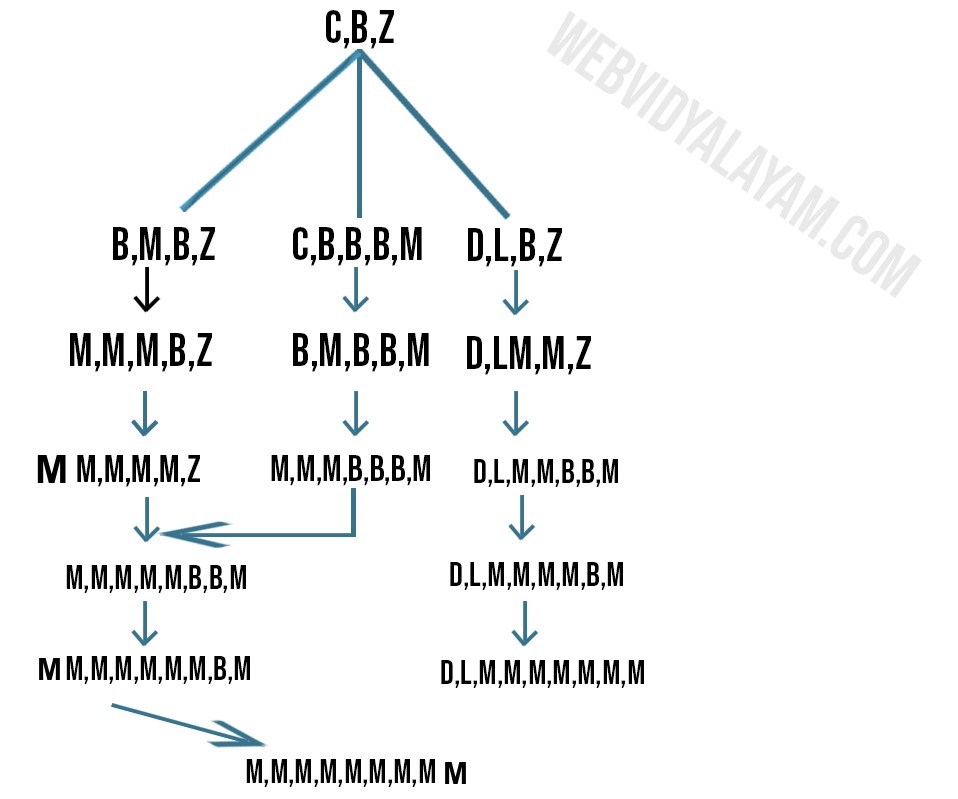
A graph search control strategy might explore many equivalent paths in producing a database containing only M’s.

Redundant Paths can lead to inefficiencies because the control strategy might attempt to explore all of them; worse it might do work that is wasted ultimately in exploring paths that do not terminate.

One way to avoid the exploration of these redundant paths is to recognize that the initial database can be decomposed or split into separate components that can be processed independently.

C B Z can be looked at as 3 distinct elements of C,B,Z so this is what we do here we break C B Z into  C, B and Z  then apply the rewriting rules that we have highlighted initially. So C can be written as D L or BM , B  is written as MM and Z is written  as  BMM.DL can be changed as D to D and  L,B M is BMM, MM is written as MM and BB MM is  again split as B M B .So, we had an initial C B  Z. We split it up as C,B and Z  applied the rewriting rules to get DL ,BM,MM, BMM. Then again split this into D and L,B M into B and M, MM into M and M and BMM as BMB. So then we start applying the rewriting rules and apply only to this B. And we get a string where all of these M’s are satisfied. Now, one thing to note here is very important property that we want to explore. If you look at here; at this point,  all of C, B and Z needs to be brought to termination. All of these parts are important. But at this point ,When I think of rewriting C as either DL and BM, I can rewrite only  in 1 one way, whereas again at the next lower level both of them needs to be looked at. All of 3  needs to be looked at here. But again here when I’m looking at , I look at only 1 alternate path but here there are no alternate path I have only 1 path So it became simpler here.

Properties of Commutative production system, Introduction to Decomposable production system

Properties of Commutative   production system

  1.  An irrevocable control regime can always be used in a commutative system because the application of a rule never needs to be taken back or undone.
  2. No need of a mechanism for applying alternative sequence of rules .The rule that is applicable  to an earlier database is applicable to the current one as well.
  3. In a commutative production system there may be a chance of having inappropriate rules. This inappropriate rule just delays but never prevents termination.

Decomposable production system

 In order to understand decomposable production system. Consider a system   which has initial database as (C,B,Z). The production rules are based on the following rules. C could be written as (D,L) ; C could be written as ( B,M) ; B could be written as (M,M) ; Z could be written as (B,B,M) i.e.,

R1 : C → ( D,L)

R2 : C → (B,M)

R3: B → (M,M)

R4: Z → (B,B,M)

 Here I’m looking for a termination condition where the database contains only M. If I start with  the complete C B Z I have 3 rewriting rules for C, B, Z so  my path would be 3 different distinct paths. I could write C or B or Z.

                                                            FIGURE  1

And each of them could take different paths. And what is important is to note that some path may lead to termination. But, some other path may not lead to termination . Instead of looking at C B Z as a complete single entity , the decomposable production system allows me to  look at C B Z as 3 different units of C B Z .This is because of the problem that  I get  when I look at it as 1 single unit as highlighted.

Open Systems Interconnection Model(OSI)

OSI (open systems interconnection)MODEL:

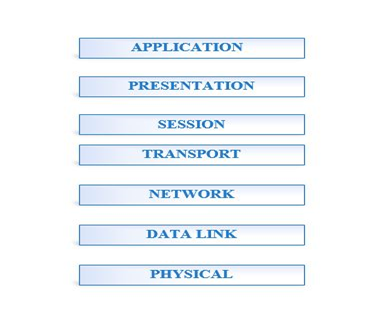
For providing communication between two devices international standard organisation(ISO) developed a model known as open systems interconnection(OSI). Osi model isn’t a protocol, it is a model for understanding and designing a specification that’s flexible and robust. It consist of 7 interconnected layers to passes information within the network. Seven layer in osi model are namely.

1.physical

2.data link

3. network

4.transport

5.session

6.presentation

7.application

Physical layer:

Physical layer is responsible for converting frames from datalink layer into bits at the receiving end, and bits from physical layer is given to datalink layer.some of the functions of physical layer is signal coding, representation of bits, physical topology,line configuration, data rate, transmission mode.

Datalink layer is responsible for converting packets from network layer into frames at the receiving end, and frames from datalink layer is given to network layer.it makes physical layer error free to the upper layers.some of the fuctions of datalink layer is framing, physical addressing, flow control, error control and access control.

Network layer:

 Network layer is responsible for converting data segements from session layer into packets at the receiving end, and packets from network layer is given to session layer. These layer defines routing for transmitting data from source to destination.some of the funtions of network layer are logical addressing, routing.

Transport layer:

Transport layer is responsible for end-to-end(source to destination) delivery of the entire message the layer converts data into smaller segements for sending and at the receiving end the segements are converted into original data.some of the funtions of transport layer are: service point addressing, segementation and reassembly, connection control, flow control, error control.

Session layer:

Responsibility of session layer is to establish, maintains and disconnects between communicating systems. It provides communication between two devices either in simple or half duplex mode.some of the functions of session layer are dialog control, syncronisation.

 Presentation layer:

Presentation layer cares with the syntax and semantics of the knowledge exchanged between two systems. It translates the application into network format and vice versa. some funtions of presentation layer are:Translation, encryption and decryption.

Application layer:

It provides end-users for the processing of data and supports services such as email, file transfer, shared data management, network software services, and other types of distributed information services, this layer acts as an interface between end-users and network. It allows mainly access to network resources.

Fig: OSI model

convolution of signals

0

Convolution for both signals and sequence:

Convolution is defined as mathematical way of combining two signals in order to form third the signal. It plays a significant role because it relates the input signal and impulse response of the system to the output of the system. Which is used to provide relationship of LTI system.

Some important properties of convolution are:

Let us consider two signals x1(t) and x2(t) for these the convolution is

x1(t)* x2(t) = ) )  = ) )

Commutative property:

The commutative property of convolution is

x1(t)*x2(t) = x2(t) *x1(t)

Distributive property:

The Distributive property of convolution is

x1(t)*[ x2(t)+ x3(t)]= [x1(t)* x2(t)]+[ x1(t)* x3(t)]

Associative property:

The Associative property of convolution is

x1(t)*[ x2(t)*x3(t)]= [x1(t)* x2(t)]* x3(t)

Convolution performs the following operations are:

  • Folding
  • Multiplication
  • Addition
  • Shifting

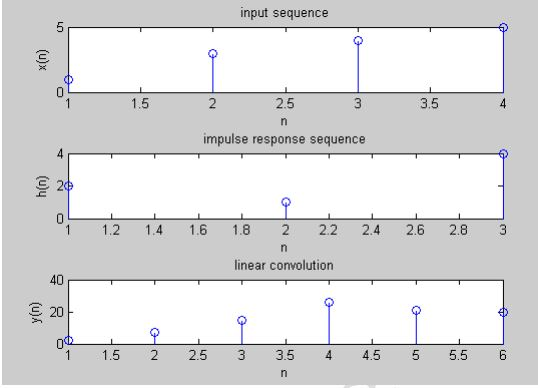
clc;

close all;

   clear all;

%program for convolution of two sequences

x=input(‘enter input sequence: ‘);

h=input(‘enter impulse response: ‘);

y=conv(x,h);

subplot(3,1,1);

stem(x);

xlabel(‘n’);

ylabel(‘x(n)’);

title(‘input sequence’)

subplot(3,1,2);

stem(h);

xlabel(‘n’);

ylabel(‘h(n)’);

title(‘impulse response sequence’)

subplot(3,1,3);

stem(y);

xlabel(‘n’);

ylabel(‘y(n)’);

title(‘linear convolution’)

disp(‘linear convolution y=’);

disp(y)

%program for signal convolution

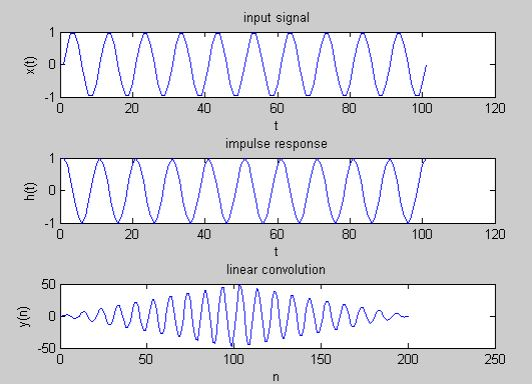
t=0:0.1:10;

x1=sin(2*pi*t);

h1=cos(2*pi*t);

y1=conv(x1,h1);

figure;

subplot(3,1,1);

plot(x1);

xlabel(‘t’);

ylabel(‘x(t)’);

title(‘input signal’)

subplot(3,1,2);

plot(h1);

xlabel(‘t’);

ylabel(‘h(t)’);

title(‘impulse response’)

subplot(3,1,3);

plot(y1);

xlabel(‘n’);

ylabel(‘y(n)’);

title(‘linear convolution’);

NEED FOR DATA COMMUNICATION

REQUIREMENT FOR DATA COMMUNICATION:

Data communication and networking plays a significant role to perform some tasks.

Flow control of data:

In order to handle fast data flow which is sent from transmitter to receiver we require some data flow control mechanism while making agreement between two communicating devices.

Transmission system utilization:

To make tranmission channel usage more efficient while sharing information between two communcating devices we require transmission system utilisation.

Signal Generation:

Communicating devices should capable of generating signal and receiving of signals from transmitter.

Addressing:

If we want to share information between more than two devices source needs to provide its correct identity,in order to send the information to correct destination with the help of addressing.

Errror detection and correction:

While communicating between two devices the transmitted signal gets distored because of some intermediate devices. This errors in the transmitted signal is corrected at the receiver by using some error detection and correction codes.

Error detection methods: Parity checking, LRC, VRC, CRC etc.,

Error correction methods: Hamming codes, ARQ etc.,

Routing:

Router are used to send data to the destination.

PROTOCAL AND ITS TERIMINOLOGY:

Protocal:

Protocal may be defined how the communication will take place, what is communication and when communication should done. Some of key elements of protocal are:

syntax:

The word syntax refers to format or way of representing the data and meaning the order in which they are presented. Let us consider a example of simple protocal which defined first 8 bits for address of the sender, last 8 bits for receiver adress and rest of the bits for message itself.

semantics:

The term semantics is defined as meaning of section of bits, for example the identification of final destination of the message.

timing:

Timing terminology is important to determine when the data should be sent and how fast it should be sent.